




Blockchain technology supports the recording and verification of digital transactions across a network. Beyond cryptocurrency, it has applications in financial services, supply chain management, digital identity and decentralised applications.
An online MCA in Blockchain Technology combines postgraduate computer applications study with specialised learning in blockchain systems and their applications.
Amity University Online offers an MCA with Specialisation in Blockchain Technology and Management, with a programme fee of ₹1,70,000 listed by Learnurture. This guide covers its eligibility criteria, fees, semester-wise syllabus and career opportunities.
Students comparing postgraduate computing programmes can explore online MCA courses.
What Is an Online MCA in Blockchain Technology?
An Online MCA in Blockchain Technology is a postgraduate computer applications programme that combines core computing subjects with specialised study of blockchain systems, cryptography and decentralised application development.
The specialisation builds on subjects such as database management, software engineering, data structures and programming. It also covers blockchain-specific areas, including Bitcoin networks, Ethereum, Hyperledger, cryptography and blockchain implementation.
The aim is to connect computer science fundamentals with the technologies used to develop and implement blockchain-based solutions.
Online MCA in Blockchain Technology: University, Fees and Eligibility
| Programme Detail | Information |
|---|---|
| University | Amity University Online |
| Degree | Master of Computer Applications (MCA) |
| Specialisation | Blockchain Technology and Management |
| Duration | 2 years |
| Programme structure | 4 semesters |
| Total programme fee | ₹1,70,000 |
| Eligibility | BCA; a bachelor’s degree in Computer Science or Engineering; or a bachelor’s degree in Science, Commerce or Arts with Mathematics at 10+2 |
| Mathematics requirement | Students without Mathematics at 10+2 or graduation can apply after qualifying the required bridge course |
| Eligibility for international students | Graduation from a recognised university and an AIU certificate of equivalence, as specified by Amity |
| Other MCA specialisations | Machine Learning and Artificial Intelligence (ML & AI), Augmented Reality and Virtual Reality (AR & VR), Cyber Security, and Software Engineering |
Online MCA in Blockchain Technology: Semester-Wise Syllabus
| Semester 1 | Semester 2 |
|---|---|
| Advanced Database Management Systems | Blockchain Technology and Management |
| Advanced Software Engineering Principles | Information Security, Cloud Security, Risk & Compliance |
| Core Java | Data Structures and Algorithm Design |
| Graph Theory and Combinatorics | Introduction to Ethereum, Enterprise Blockchain Applications and Hyperledger |
| Professional Communication | Network Security and Cryptography |
| — | Research Methodology |
| Semester 3 | Semester 4 |
|---|---|
| Architecting Blockchain Solutions | Major Project |
| Building Ethereum Applications | — |
| Professional Ethics | — |
| Programming Fundamentals: Golang and Solidity | — |
| Quantitative Aptitude | — |
| Seminar (Evaluation) | — |
| Technicalities and Implementation of Blockchain | — |
| Unix/Linux Programming | — |
What Blockchain Technologies and Tools Does the Programme Cover?
The specialisation focuses on blockchain networks, cryptographic techniques, enterprise platforms and decentralised application development. These technologies explain how blockchain systems record transactions, protect information and support software applications.

Cryptography and Cryptocurrency
Cryptography uses techniques such as hashing and digital signatures to help protect information and verify transactions. In blockchain systems, these methods support data integrity and help participants validate digital records.
Cryptocurrency applies blockchain technology to digital transactions. Bitcoin is one example of a cryptocurrency that operates through a decentralised network.
Bitcoin and Transaction Validation
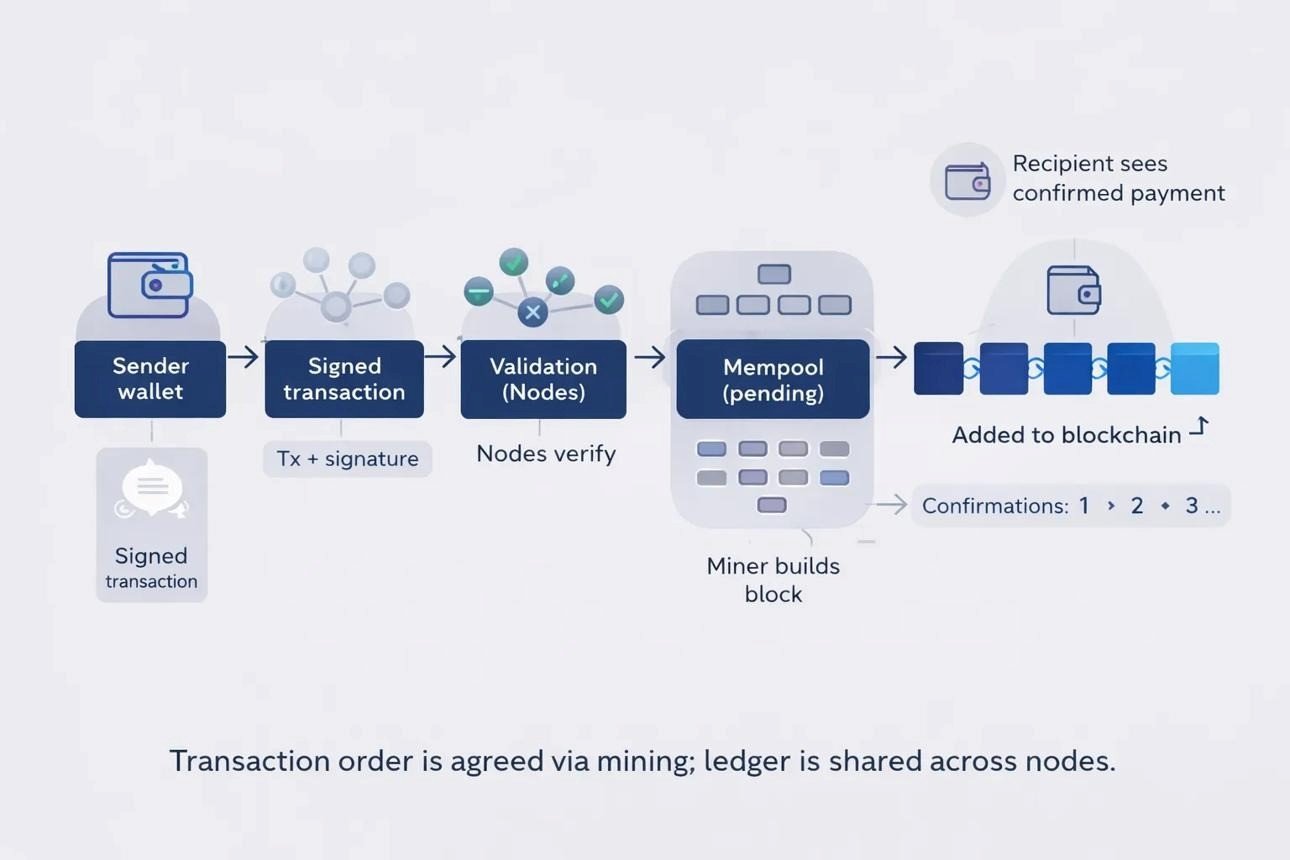
Bitcoin records transactions on a shared blockchain ledger. Network participants validate transactions according to the system’s rules before they are added to the blockchain.
Understanding Bitcoin and its network introduces students to decentralised transaction processing and the mechanisms used to maintain a consistent transaction history.
Ethereum and Smart Contracts
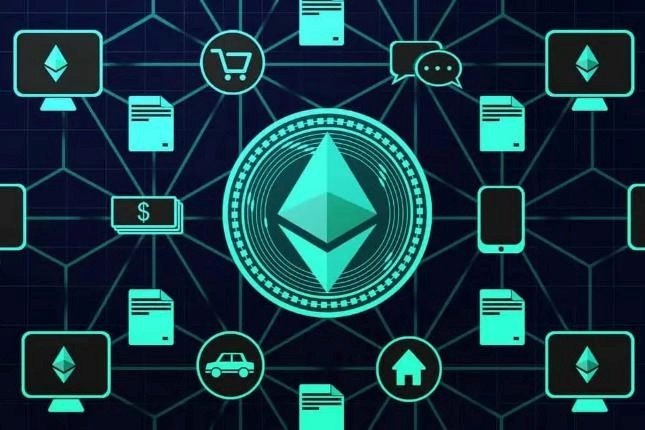
Ethereum is a blockchain platform that supports smart contracts—programs that execute predefined instructions when specified conditions are met.
The programme covers Ethereum application development and introduces Solidity, a programming language used to write smart contracts for Ethereum-compatible networks.
Hyperledger and Enterprise Blockchain
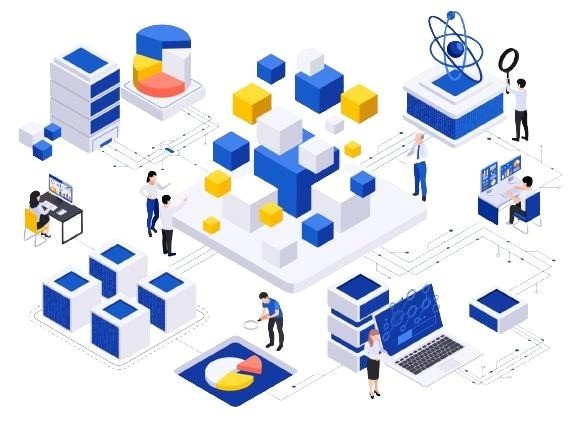
Hyperledger is an umbrella of open-source projects for developing enterprise blockchain solutions. These technologies support applications where organisations need shared, verifiable records and controlled participation.
Enterprise blockchain applications can be relevant to areas such as supply chain management, financial services and business operations.

Decentralised Application Development
Decentralised applications (DApps) interact with blockchain networks rather than relying entirely on a conventional centralised application architecture.
Developing these applications involves understanding blockchain platforms, programming concepts and implementation methods. Ethereum, Solidity and Golang are relevant technologies within this technical area.
Career Opportunities and Salary After an Online MCA in Blockchain Technology
An Online MCA in Blockchain Technology provides postgraduate computer applications knowledge alongside specialised learning in blockchain systems, smart contracts and decentralised applications. Graduates can explore technical and consulting roles based on their programming skills, practical projects and experience.
Career Options After an Online MCA in Blockchain Technology
| Job Role | Key Responsibilities |
|---|---|
| Blockchain Developer | Develops applications that interact with blockchain networks. |
| Smart Contract Developer | Writes and tests smart contracts. |
| Blockchain Engineer | Builds and maintains blockchain systems and integrations. |
| Blockchain Security Analyst | Identifies security vulnerabilities in blockchain applications. |
| Cryptocurrency Analyst | Analyses cryptocurrency markets and digital assets. |
| Blockchain Solutions Architect | Designs blockchain solutions for business requirements. |
| Blockchain Consultant | Advises organisations on blockchain applications and implementation. |
| Blockchain Project Manager | Coordinates blockchain projects, teams and delivery. |
Which Industries Use Blockchain Technology?
Blockchain skills are relevant to several industries:
- Financial services: Digital assets and blockchain-based transactions.
- Supply chain management: Product tracking and traceability.
- Technology: Blockchain platforms and decentralised applications.
- Cybersecurity: Security assessment of blockchain systems.
- Enterprise operations: Blockchain-based business processes and record management.
What Salary Can Blockchain Professionals Earn in India?
| Work experience | Indicative salary |
|---|---|
| Entry-level (0-1 year) | ₹4-7.4 LPA |
| Early-career (1-3 years) | ₹8.8-12.9 LPA |
Note: Salaries vary by job role, location, employer, technical skills and work experience.
How Does Amity University Online Support Learning and Career Preparation?
Amity University Online combines digital learning resources with practical learning activities and career support to help students build relevant knowledge and skills.
| Learning feature | How it supports students |
|---|---|
| Video lessons | Provides course content for online study. |
| Visual explainers | Presents concepts through visual learning materials. |
| Interactive exercises | Helps students practise and reinforce concepts. |
| Industry projects | Provides opportunities to apply learning to practical projects. |
| AI learning support | Includes Prof. AMI and AI-powered learning features. |
| Business simulations | Offers simulated business scenarios for applied learning. |
| Career support | Supports career preparation and job-search activities. |
How to Apply for an Online MCA in Blockchain Technology
Follow these steps to apply for Amity University Online’s MCA in Blockchain Technology and Management.
- Check eligibility: Confirm that your previous qualification meets the programme’s admission requirements, including the Mathematics requirement where applicable.
- Complete the application: Fill in the online application form with your personal and academic details.
- Submit documents: Provide the academic records and other documents required for admission.
- Pay the applicable fee: Review the fee and payment instructions before completing payment.
- Complete enrolment: Follow the university’s instructions to finalise your admission and access the online learning platform.
Before applying, review the programme’s eligibility criteria, fees and syllabus, and compare it with other online MCA courses to find the option that best fits your academic background and career goals.
For help understanding eligibility, comparing programme details or reviewing your admission options, get admission guidance.
Conclusion
An Online MCA in Blockchain Technology combines core computer applications subjects with specialised learning in blockchain architecture, cryptography, Ethereum, Hyperledger, Solidity and Golang.
Amity University Online offers an MCA with Specialisation in Blockchain Technology and Management over two years and four semesters, with a programme fee of ₹1,70,000. Applicants should check the eligibility criteria, including the Mathematics requirement and applicable bridge-course provision.
Explore the Amity University Online for more information about the university and its online programmes.
Frequently Asked Questions
1. How long is Amity University Online’s MCA in Blockchain Technology?
Amity University Online’s MCA with Specialisation in Blockchain Technology and Management is a two-year programme divided into four semesters, with a major project in the final semester.
2. What is the fee for an online MCA in Blockchain Technology at Amity?
The total programme fee is ₹1,70,000. Confirm the applicable fee and payment terms with Amity University Online before admission.
3. Can I apply for Amity’s MCA in Blockchain Technology without Mathematics?
Yes. Applicants who have not studied Mathematics at 10+2 or graduation can apply after qualifying the required bridge course, subject to the university’s eligibility requirements.
4. Which programming languages and technologies are taught in Amity’s MCA in Blockchain Technology?
The programme covers Solidity, Golang, Ethereum and Hyperledger, along with cryptography, blockchain architecture and implementation. Students also study Ethereum application development and blockchain solution implementation.