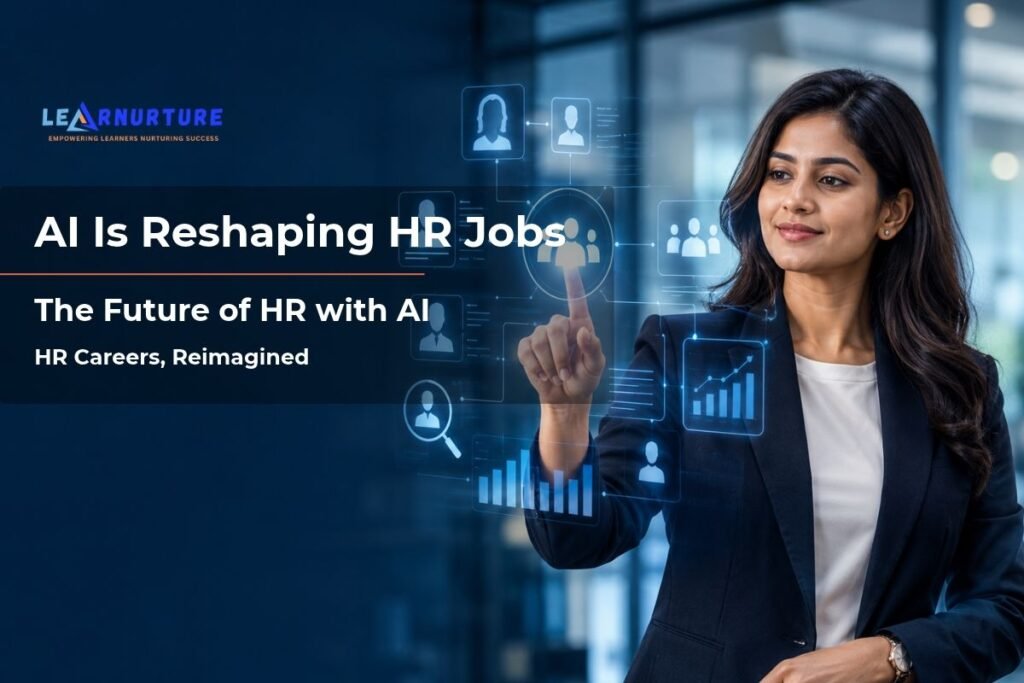



Artificial intelligence is changing how companies recruit employees, manage performance and plan their workforce. HR teams are increasingly using AI tools to screen applications, analyse employee data and automate routine tasks.
As these tools become part of everyday HR operations, professionals need to develop skills beyond traditional human resource management. Understanding AI, interpreting workforce data and making informed decisions are becoming increasingly important.
How Is AI Changing HR?
AI is helping HR teams handle information and routine processes more efficiently. Its impact is particularly visible in recruitment, employee management and workforce planning.
Traditionally, HR teams spent considerable time reviewing applications, maintaining employee records and preparing reports. AI-powered systems can now assist with these activities.
For instance, recruitment software can organise candidate applications, while people analytics tools can help HR teams identify workforce trends. These insights give HR professionals more information to work with when planning recruitment, employee development and retention.
However, the final decisions still require human involvement, particularly when assessing candidates, addressing employee concerns or resolving workplace issues.
Where Is AI Used in HR?
AI is being used in different HR activities, from reviewing job applications to identifying employee training needs. These applications help HR teams process information, identify patterns and manage routine tasks.
| HR Function | How AI is Used | Impact on HR Work |
|---|---|---|
| Recruitment | Screens applications, matches candidate profiles and supports candidate communication | Helps recruiters organise applications and focus on candidate assessment |
| Employee engagement | Analyses feedback, engagement surveys and employee data to identify patterns | Helps HR teams investigate employee concerns and retention trends |
| Onboarding and helpdesks | Uses chatbots to answer routine questions about leave, policies and employee benefits | Reduces the need to handle every routine query manually |
| Performance management | Analyses performance information, objectives and employee feedback | Supports performance reviews and identifies development needs |
| Learning and development | Recommends training based on employee skills and learning requirements | Helps HR teams identify skill gaps and plan relevant training |
AI in Recruitment
AI-powered recruitment systems help HR teams organise applications and identify candidates whose qualifications match job requirements.
When a company receives a large number of applications, an applicant tracking system can organise candidate profiles and help recruiters shortlist relevant applicants.
Recruiters still need to review applications, conduct interviews and assess candidate suitability. They must also check that automated screening does not unfairly disadvantage applicants.
AI in Employee Engagement
AI-powered analytics can help HR teams examine employee feedback, survey responses and engagement trends.
For instance, if employee data shows an increase in turnover within a department, HR professionals can investigate possible reasons, such as workload, management concerns or limited career development opportunities.
These insights help HR teams identify areas that need attention, but decisions about employee retention still require human judgement.
AI in Onboarding and Employee Support
AI chatbots can answer routine employee questions about leave policies, tax declarations, benefits and onboarding procedures.
For example, a new employee can use an HR chatbot to find information about company policies without waiting for an HR representative to respond.
HR teams can then spend more time handling queries that require individual attention.
AI in Performance Management
AI tools can organise performance data, track employee objectives and analyse feedback collected from different sources.
These insights can support performance reviews and highlight areas where employees need additional training or guidance. However, managers must still consider individual contributions, responsibilities and feedback before making performance decisions.
AI in Learning and Development
AI-powered learning platforms can recommend training based on an employee’s current skills, job responsibilities and development needs.
For example, an employee moving into a managerial role may receive recommendations for leadership, communication or team management training.
HR teams can use these recommendations to plan employee development and identify skills that need improvement.
Skills HR Professionals Need for AI
HR professionals need more than knowledge of recruitment and employee management. They also need to understand digital tools, work with employee data and apply technology to HR decisions.
| Skill | How It Applies to HR |
|---|---|
| AI tool proficiency | Using AI applications for recruitment, communication and routine HR tasks |
| Generative AI prompting | Creating job descriptions, interview questions and internal communication drafts using AI tools |
| People analytics | Understanding employee data, workforce trends and retention patterns |
| Data interpretation | Turning HR reports and analytics into practical decisions |
| HRIS and digital HR systems | Working with HR management systems, recruitment platforms and cloud-based HR software |
| Communication and interpersonal skills | Managing employee relations, workplace concerns and discussions |
| Strategic decision-making | Connecting workforce information with organisational goals |
| AI ethics and data privacy | Protecting employee information and checking automated decisions for potential bias |
Do HR Professionals Need Coding Skills?
No. Most HR professionals do not need programming skills to use AI tools in their daily work.
They should, however, understand how these tools work, what information they use and where their limitations lie. Familiarity with spreadsheets, dashboards, HR management systems and basic data analysis is useful.
Those interested in people analytics or HR technology can develop more advanced data skills as they progress in their careers.
Will AI Replace HR Professionals?
AI is changing the tasks HR professionals handle, but it does not remove the need for people who understand recruitment, employee relations and workforce management.
Tasks such as sorting applications, scheduling interviews and preparing routine reports can be automated. However, evaluating candidates, resolving employee concerns and making workforce decisions still require human judgement.
| Tasks AI Can Support | Responsibilities Requiring Human Judgement |
|---|---|
| Sorting candidate applications | Assessing candidate suitability |
| Scheduling interviews | Conducting interviews and evaluating candidates |
| Preparing routine HR reports | Interpreting findings and deciding what action to take |
| Analysing employee feedback | Understanding and addressing employee concerns |
| Recommending learning resources | Identifying individual development needs |
For instance, AI can identify an increase in employee turnover within a department. HR professionals must investigate the reasons, discuss the findings with managers and decide how to improve employee retention.
HR professionals who combine people-management knowledge with technology skills will be better prepared to work with these changes.
Career Opportunities in AI-Driven HR
As companies adopt digital HR systems, automation and workforce analytics, professionals with HR knowledge and technology skills can explore different career paths.
| Career Role | Key Responsibilities |
|---|---|
| People Analytics Specialist | Analyses employee data, workforce trends and retention patterns |
| HR Technology Specialist | Manages digital HR systems and supports their implementation |
| Talent Acquisition Specialist | Uses recruitment platforms and data to support hiring |
| HR Business Partner | Connects employee management and workforce planning with business goals |
| HR Analytics Manager | Leads workforce analysis, HR reporting and data-based planning |
| HR Transformation Specialist | Helps organisations improve HR processes through technology |
The experience required varies by role. For example, someone moving into people analytics needs to develop data analysis skills, while an HR technology specialist needs familiarity with digital HR systems.
Learning AI tools alone is not enough to qualify for these positions. Employers also look for relevant HR experience, problem-solving ability and an understanding of how HR functions operate.
How Can HR Professionals Upskill?
HR professionals can start developing AI-related skills while continuing their current jobs. These steps provide a practical starting point:
1. Learn where AI is used in HR: Understand how AI supports recruitment, employee analytics, onboarding, performance management and workforce planning.
2. Practise with generative AI tools: Try creating job descriptions, preparing interview questions and drafting employee communications. Review the results for accuracy, fairness and appropriate language.
3. Improve data analysis skills: Learn to read HR reports, understand employee metrics and identify patterns in workforce data.
4. Learn digital HR systems: Become familiar with applicant tracking systems, HR management software and employee information platforms.
5. Understand responsible AI use: Learn how employee information should be protected and why automated recruitment and performance decisions need human oversight.
6. Choose learning based on your career goals: Short-term certifications can help develop specific technical skills, while a management qualification can provide broader knowledge of HR and business management.
Professionals balancing work and further education can also explore online MBA options for working professionals.
Online MBA in AI for Human Resources
The MBA in AI for Human Resources combines core management subjects with AI applications in human resource management.
Programme Details
| Particulars | Details |
|---|---|
| University | JAIN University Online |
| Programme | MBA |
| Specialisation | AI for Human Resources |
| Duration | 2 years |
| Total tuition fee | ₹1,96,000 |
| Learning mode | Online |
| Eligibility | Bachelor’s degree of at least 3 years in any stream from a UGC-recognised university |
| Minimum marks | 50% aggregate or equivalent |
| Relaxation | 5% relaxation for SC/ST applicants |
| Final-year eligibility | Students in the final semester of their bachelor’s degree can also apply |
Subjects Covered
| Curriculum Subjects |
|---|
| Organisational Behaviour and People Analytics |
| AI for Recruitment and Onboarding Automation |
| Performance and Engagement Measurement Using AI |
| Predictive Human Resource Analytics |
| Diversity, Inclusion and Retention Prediction Models |
| AI-Enabled Leadership and Change Management |
| Smart Talent Development and Learning Systems |
Conclusion
AI is changing how HR teams handle recruitment, employee data, performance reviews and workforce planning. As these tasks become more technology-driven, HR professionals need to understand both people management and the tools used to support these functions.
Developing skills in AI applications, people analytics and digital HR systems can help professionals adapt to changing HR responsibilities. Combining these skills with practical HR experience and sound decision-making will be important as organisations continue adopting AI.
Frequently Asked Questions
1. Will AI replace HR jobs in India?
AI can automate tasks such as sorting job applications, scheduling interviews, answering routine employee queries and preparing HR reports. However, activities such as conducting interviews, resolving employee concerns and making workforce decisions still require human judgement. HR professionals who understand AI tools and workforce analytics can adapt to these changes.
2. Which AI skills should HR professionals learn?
HR professionals should focus on skills they can apply in their daily work:
1.Using generative AI to draft job descriptions and interview questions.
2.Analysing employee data and workforce trends.
3.Working with applicant tracking systems and HR management software.
4.Understanding AI-assisted recruitment and employee analytics.
5.Protecting employee information and recognising bias in automated decisions.
3. How can working HR professionals learn AI without leaving their jobs?
They can start by using AI tools for routine HR tasks, such as drafting job descriptions, preparing interview questions and organising employee information. Learning spreadsheet analysis, people analytics and digital HR systems can build on this experience.
Online courses and flexible management programmes are other options for professionals who want to continue learning alongside their jobs. They can also explore online MBA options for working professionals.
4. Is an Online MBA in AI for HR different from an MBA in HR?
A conventional MBA in HR focuses on subjects such as recruitment, talent management, employee relations and organisational behaviour.
An MBA in AI for Human Resources combines management subjects with topics such as people analytics, AI-assisted recruitment, predictive HR analytics and AI-enabled leadership. The exact subjects depend on the university’s curriculum.
5. Can graduates from non-HR backgrounds pursue an MBA in AI for Human Resources?
Yes. The JAIN University Online MBA in AI for Human Resources accepts applicants with a bachelor’s degree of at least three years in any stream from a UGC-recognised university.
The minimum aggregate requirement is 50%, with a 5% relaxation for SC/ST applicants. Final-semester bachelor’s degree students can also apply.
6. How long does the JAIN Online MBA in AI for Human Resources take?
The JAIN University Online MBA in AI for Human Resources has a duration of two years, divided into four semesters.