
Are Online Degrees UGC Approved?
The Complete Guide for 2026
- Yes, online degrees are valid in India when offered by UGC-recognised universities with UGC-DEB entitlement for the respective programme.
- Students should verify both university recognition and programme approval status before enrolling in an online degree.
- A UGC-DEB entitled online degree can be used for higher education and career opportunities when it meets applicable regulatory requirements.
The growth of digital education has changed the way students and working professionals pursue higher education. Today, learners can complete bachelor’s and master’s degree programmes through flexible online learning formats without attending traditional classroom sessions.
Despite the growing popularity of online education, many students are still unsure how to identify a recognised online degree. The availability of an online course on the internet does not automatically mean that the qualification is recognised. Students need to verify whether the university is recognised by the University Grants Commission (UGC) and whether the specific online programme has UGC-DEB entitlement.
A recognised online degree can help learners continue higher education, improve career opportunities, and gain qualifications while managing professional or personal responsibilities. However, choosing the right programme requires careful evaluation of university recognition, course structure, accreditation, learning support, and career relevance.
At Learnurture, we help students understand online education options, compare universities, and choose programmes aligned with their academic background and professional goals, including guidance on selecting suitable online degree courses in India based on their career aspirations.
Table of Contents
- What Makes an Online Degree UGC Approved?
- Why Does UGC Approval Matter for Online Degrees?
- What Is a UGC Approved Online Degree?
- What Is the Difference Between UGC Recognition and UGC-DEB Entitlement?
- How Does UGC Approve Online Degree Programs?
- How to Check if an Online Degree Is UGC Approved?
- Are Online Degrees Valid in India?
- UGC Approved Online Degree vs Regular Degree vs Distance Degree: What Is the Difference?
- List of UGC Approved Online Degree Universities in India
- What Should You Check Before Choosing a UGC Approved Online Degree?
- Checklist Before Selecting an Online Degree
- What Happens If a University Is Not UGC Approved?
- Can You Get a Job After Completing a UGC Approved Online Degree?
- How to Choose the Right Online University in India?
- Making an Informed Choice About Online Degrees
- FAQS
What Makes an Online Degree UGC Approved?
Yes, online degrees are approved by UGC when they are offered by recognised universities and the specific programmes receive approval or entitlement under UGC-DEB regulations.
The University Grants Commission (UGC) regulates higher education standards in India and provides guidelines for universities offering online and distance learning programmes.
A valid online degree generally requires:
- The university should be recognised by UGC.
- The institution should be eligible to offer online education.
- The specific programme should have UGC-DEB approval/entitlement.
- The university should follow required academic and examination standards.
It is important to understand that approval applies to the specific programme and mode of learning, not only the university name.
For example, if a university offers multiple programmes, students should verify whether the particular online MBA, online BBA, online BCom, online MCA, or another degree programme is approved for online delivery.
Students comparing institutions should evaluate factors such as recognition, programme availability, fees, and academic support while selecting from UGC approved online universities in India.
Why Does UGC Approval Matter for Online Degrees?
UGC approval helps ensure that online degree programmes follow recognised academic standards and regulatory requirements.
A UGC recognised online degree can provide students with confidence regarding:
1. Academic Recognition
A recognised degree helps students pursue further education opportunities and meet eligibility requirements for many professional pathways.
2. Career Advancement
Working professionals can use online degrees to upgrade their qualifications while continuing employment.
3. Flexible Learning
Online education allows students to access lectures, study materials, and assessments digitally.
4. Credibility of Qualification
A degree from a recognised institution provides better credibility compared to unverified online courses.
However, students should not rely only on marketing claims. Before admission, they should verify:
- University recognition status
- Programme approval
- Course curriculum
- Faculty support
- Examination process
- Student services
Key Takeaway: Online degrees are valid when they are offered by recognised universities with UGC-DEB entitlement for the specific programme. Students should verify both university recognition and programme approval before admission.
What Is a UGC Approved Online Degree?
A UGC approved online degree is a recognised qualification offered through online learning mode by a university that meets UGC and UGC-DEB regulatory requirements.
Unlike short-term online certifications, degree programmes provide formal academic qualifications such as:
- Bachelor’s degrees
- Master’s degrees
- Postgraduate qualifications
Examples of online degree programmes include:
| Degree Type | Examples |
|---|---|
| Management Degrees | Online MBA, Online BBA |
| Commerce Degrees | Online BCom, Online MCom |
| Computer Applications | Online MCA |
| Arts & Humanities | Online MA programmes |
These programmes are designed to provide flexibility while maintaining academic standards related to:
- Curriculum development
- Faculty qualifications
- Digital learning infrastructure
- Assessments
- Examinations
- Student support
Students looking for flexible higher education options can explore different online university programs in India based on their career goals and academic requirements.
What Is the Difference Between UGC Recognition and UGC-DEB Entitlement?
Many students confuse the terms UGC approved university and UGC approved online degree courses. Although they are connected, they represent different aspects of approval.
| Factor | UGC Recognition | UGC-DEB Entitlement |
|---|---|---|
| Meaning | Recognition of the university as a higher education institution | Permission to offer specific programmes through online/distance mode |
| Applies To | University | Individual online programmes |
| Purpose | Confirms institutional legitimacy | Confirms programme eligibility for online delivery |
| Importance | Ensures university recognition | Ensures online degree approval |
For example, a university may be recognised by UGC, but students should still check whether the specific online programme they choose has UGC-DEB entitlement.
This distinction is important because students often assume that every course offered by a recognised university automatically qualifies as an approved online degree.
Understanding UGC-DEB Entitlement for Online Degrees
The Distance Education Bureau (DEB) operates under UGC and regulates online and distance education frameworks in India.
UGC-DEB focuses on maintaining quality standards for online learning through:
Programme Approval
Universities must receive permission to offer specific online degree programmes.
Academic Standards
Institutions must maintain quality in curriculum, teaching methods, and learning resources.
Examination Guidelines
Online programmes must follow proper assessment and evaluation processes.
Student Support
Universities should provide academic assistance, technical support, and administrative services.
Transparency
Students should have access to information related to:
- Programme details
- Eligibility criteria
- Admission process
- Recognition status
Key Takeaway: UGC recognition confirms that a university is recognised, while UGC-DEB entitlement confirms that a specific online degree programme can be offered through online mode. Both factors should be checked before selecting an online degree.
How Does UGC Approve Online Degree Programs?
UGC approval for online degree programmes ensures that universities meet required standards for delivering education through digital platforms.
Universities offering online degree programmes must follow regulations related to:
- Digital learning infrastructure
- Faculty qualifications
- Academic resources
- Student support systems
- Online examination methods
- Programme delivery standards
The purpose of this framework is to maintain the quality and credibility of online education while allowing students to access flexible learning opportunities.
Role of UGC and Ministry of Education in Online Education
The University Grants Commission (UGC) works under the Ministry of Education, Government of India, to maintain standards in higher education.
UGC provides guidelines related to:
- University recognition
- Online education regulations
- Distance education standards
- Quality assurance
The introduction of regulated online education has helped learners access degree programmes while ensuring that institutions follow defined academic requirements.
Factors Considered for Online Programme Approval
Before offering online degree courses, universities must meet various requirements.
1. University Recognition
The institution must have valid recognition and comply with UGC regulations.
2. Programme Eligibility
The specific degree programme must be permitted for online delivery.
3. Digital Learning Infrastructure
Universities should provide:
- Learning management systems
- Online study materials
- Virtual classrooms
- Digital academic resources
4. Faculty and Academic Support
Qualified faculty members and academic support systems help maintain learning quality.
5. Examination Process
Online universities must follow appropriate assessment and examination guidelines.
6. Student Services
Students should receive support related to:
- Admission
- Academics
- Technology
- Administration
Students planning their higher education journey should evaluate factors such as university recognition, programme structure, specialisations, and learning support while reviewing top online universities in India
Key Takeaway: UGC approval for online degrees involves evaluating university recognition, programme eligibility, digital infrastructure, academic standards, and student support systems.
How to Check if an Online Degree Is UGC Approved?
Before enrolling in any online programme, students should verify whether the degree is approved by UGC and whether the university has the required entitlement to offer that programme through online mode.
Many students search for terms like “online degree approved by UGC” or “UGC online degree” while researching programmes. However, checking approval status requires looking beyond advertisements and university claims.
A proper verification process helps students ensure that they are choosing a recognised qualification that meets regulatory requirements.
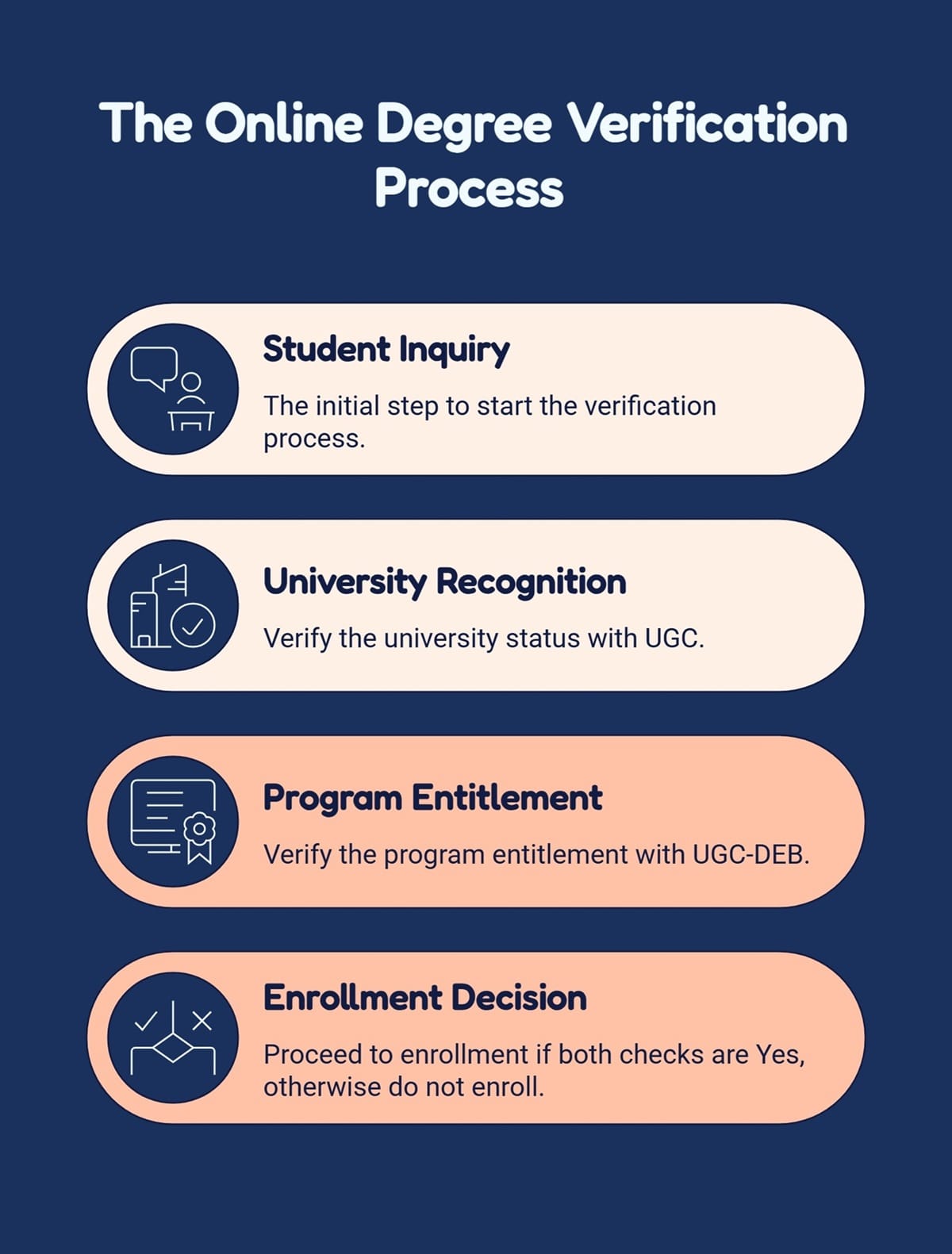
Step-by-Step Process to Verify an Online Degree Approval
1. Check University Recognition Status
The first step is confirming whether the university is recognised by UGC.
Students should verify:
- University name
- Recognition status
- Institution details
- Official university information
A recognised university forms the foundation for a valid degree qualification.
2. Verify UGC-DEB Entitlement
After confirming university recognition, students should check whether the specific online programme has UGC-DEB entitlement.
This is important because approval applies to the programme offered through a particular mode of learning.
For example:
- Online MBA approval
- Online BBA approval
- Online MCA approval
- Online BCom approval
Students should verify whether their selected programme appears under the approved online programmes list.
3. Review Programme Details
Students should carefully check:
- Programme name
- Duration
- Eligibility criteria
- Curriculum structure
- Examination process
- Learning methodology
A genuine online degree programme should provide complete information about its academic structure.
4. Check Official University Information
Students should rely on official sources such as:
- UGC website
- UGC-DEB portal
- Official university website
Avoid depending only on third-party advertisements or promotional claims.
How to Check UGC Approved Universities Online
Students can verify university approval status through official regulatory information available online.
While checking, consider:
| Verification Factor | What to Check |
|---|---|
| University recognition | Whether the institution is recognised by UGC |
| Programme entitlement | Whether the specific online programme is approved |
| Learning mode | Whether the degree is offered through online mode |
| Academic session | Whether approval applies to the relevant admission year |
| Programme details | Course duration, eligibility, and structure |
Understanding these factors helps students identify a UGC recognised online degree and avoid enrolling in unverified programmes.
Documents and Details to Verify Before Admission
Before submitting an admission application, students should review:
University Information
- Recognition details
- Accreditation status
- Institutional profile
Programme Information
- Degree name
- Specialisation options
- Duration
- Eligibility requirements
Learning Support
- Online learning platform
- Faculty interaction
- Student assistance
Career Support
- Placement assistance
- Career guidance
- Skill development opportunities
Selecting the right online degree requires comparing factors such as university recognition, programme structure, fees, specialisations, and student support. A detailed online university comparison helps students evaluate these aspects before choosing a suitable programme.
Key Takeaway: To verify whether an online degree is UGC approved, check both university recognition and UGC-DEB entitlement for the specific programme. Do not rely only on advertisements; always confirm approval through official sources.
Are Online Degrees Valid in India?
Yes, online degrees are valid in India when they are offered by recognised universities and follow UGC regulations for online education.
The acceptance of online degrees has increased significantly as universities have adopted digital learning systems and regulatory frameworks have been established to maintain academic standards.
A valid online degree can be useful for:
- Career advancement
- Higher education opportunities
- Skill enhancement
- Professional development
However, validity depends on the recognition status of the university and programme.
Are Online Degrees Equal to Regular Degrees?
According to UGC guidelines, recognised online degrees are treated at par with equivalent degrees obtained through traditional learning modes, provided they meet regulatory requirements.
This means a valid online degree can have similar academic value when:
- The university is recognised
- The programme has proper approval
- The degree is awarded according to applicable regulations
Students should still evaluate whether an online format matches their learning preferences and career requirements.
Where Are UGC Approved Online Degrees Accepted?
UGC approved online degrees can generally support:
Higher Education
Students may use recognised online degrees for further studies, subject to admission requirements of the institution they apply to.
Employment Opportunities
Many organisations consider recognised online degrees for professional roles, especially when the qualification meets job requirements.
Career Growth
Working professionals often choose online degrees to upgrade skills and improve career prospects.
Are Online Degrees Valid for Government Jobs?
A UGC recognised online degree may be considered valid for government job eligibility when it meets the required educational qualification criteria.
However, candidates should always check the specific recruitment notification because eligibility requirements can vary depending on the role, department, and examination.
Are Online Degrees Valid for Higher Studies?
Yes, recognised online degrees can be used for higher education purposes, subject to the admission rules of the institution offering the next programme.
Students planning postgraduate education should check:
- Eligibility criteria
- University requirements
- Programme recognition
Key Takeaway: Online degrees are valid in India when they are awarded by recognised universities offering UGC-DEB entitled programmes. Students should verify approval status before admission to ensure recognition.
UGC Approved Online Degree vs Regular Degree vs Distance Degree: What Is the Difference?
Students often compare online, regular, and distance education before selecting a programme.
While all three learning formats can lead to recognised qualifications, their learning methods and student experiences are different.
| Factor | Online Degree | Regular Degree | Distance Degree |
|---|---|---|---|
| Learning Mode | Digital platforms, virtual classes, online resources | Physical classroom learning | Self-learning with study materials and limited interaction |
| Flexibility | High flexibility | Fixed schedule | Flexible learning |
| Suitable For | Working professionals, flexible learners | Full-time students | Learners seeking independent study |
| Interaction | Online faculty interaction and virtual sessions | Classroom interaction | Limited interaction depending on institution |
| Accessibility | Can be accessed remotely | Requires campus attendance | Remote learning |
Online Degree vs Regular Degree
A regular degree usually requires students to attend physical classes at a university campus.
An online degree provides:
- Digital lectures
- Online assessments
- Virtual academic support
- Flexible schedules
Online learning is particularly useful for:
- Working professionals
- Entrepreneurs
- Students managing other responsibilities
However, students who prefer classroom interaction and campus life may prefer traditional education.
Online Degree vs Distance Degree
Although both offer flexibility, online and distance learning methods differ.
Online Education
Includes:
- Live virtual classes
- Digital learning platforms
- Online communication with faculty
- Structured online learning environment
Distance Education
Usually involves:
- Self-learning materials
- Independent study
- Limited direct interaction
Students should select a learning format based on their preferred learning style and career goals.
Key Takeaway: Online, regular, and distance degrees can differ in learning experience and delivery method. Students should choose a format based on flexibility needs, learning preferences, and career objectives.
List of UGC Approved Online Degree Universities in India
Several recognised universities in India offer online degree programmes across management, commerce, computer applications, arts, and other disciplines.
Before choosing a university, students should evaluate:
- Recognition status
- Programme availability
- Specialisations
- Student support
- Career services
- Learning experience
Some universities offering online programmes include:
NMIMS Online Programmes
NMIMS Centre for Distance and Online Education (CDOE) offers online programmes designed for students and working professionals looking for flexible higher education options.
Students evaluating management programmes can consider factors such as specialisations, curriculum structure, and learning support while exploring NMIMS online degree programmes.
Manipal University Jaipur Online Programmes
Manipal University Jaipur provides online undergraduate and postgraduate programmes through digital learning platforms.
Students comparing flexible education options can review Manipal University Jaipur online programmes to understand available courses and specialisations.
Amity University Online Programmes
Amity University Online offers various undergraduate and postgraduate programmes through an online learning format.
Students interested in flexible degree options can evaluate Amity University Online courses based on programme structure, eligibility, and career goals.
DY Patil Online Programmes
DY Patil Vidyapeeth provides online learning opportunities across different academic disciplines.
Students looking for recognised online qualifications can review DY Patil University Online programmes and compare available courses.
Sikkim Manipal University Online Programmes
Sikkim Manipal University offers online degree programmes designed for learners seeking flexible academic pathways.
Students can evaluate Sikkim Manipal University Online programmes while comparing programme options.
Chandigarh University Online Programmes
Chandigarh University Online provides undergraduate and postgraduate programmes through online learning platforms.
Students can review Chandigarh University Online courses to understand available programmes and specialisations.
Lovely Professional University Online Programmes
Lovely Professional University Online offers flexible degree programmes across multiple disciplines.
Students comparing online universities can explore Lovely Professional University Online programmes based on their academic interests and career objectives.
Bharati Vidyapeeth University Online Programmes
Bharati Vidyapeeth University Online provides digital learning options for students pursuing higher education remotely.
Students can evaluate Bharati Vidyapeeth University Online programmes while comparing recognised online degree options.
Jain University Online Programmes
Jain University Online offers online undergraduate and postgraduate programmes with flexible learning options.
Students considering professional and academic advancement can review Jain University Online courses before selecting a programme.
Key Takeaway: The best UGC approved online university depends on factors such as programme availability, recognition status, specialisations, fees, learning support, and career goals. Students should compare universities before making an admission decision.
What Should You Check Before Choosing a UGC Approved Online Degree?
Choosing an online degree is an important academic and career decision. While UGC approval is one of the most important factors, students should also evaluate other aspects that influence the overall learning experience and career outcomes.
A recognised degree from the right university can help students achieve their professional goals, but the choice should be based on more than just approval status.
Before selecting a programme, consider the following factors:
1. Verify University and Programme Recognition
The first step is confirming whether the university is recognised and whether the selected programme has UGC-DEB entitlement.
Students should check:
- University recognition status
- Programme approval status
- Validity for the relevant admission session
- Official university information
This ensures that the qualification meets regulatory requirements.
2. Evaluate Programme Curriculum and Specialisations
A good online degree should offer a curriculum that matches current industry requirements.
Students should review:
- Subjects covered
- Practical learning opportunities
- Specialisation options
- Industry relevance
- Skill development components
For example, management students may compare specialisations such as:
- Marketing
- Finance
- Human Resources
- Business Analytics
- Operations Management
3. Consider Learning Platform and Student Support
Online education depends heavily on digital learning infrastructure.
Students should evaluate:
- Learning management system
- Access to digital resources
- Faculty interaction
- Doubt resolution support
- Academic assistance
A strong support system improves the overall online learning experience.
4. Review Career Support Services
Career assistance can be an important factor, especially for working professionals and fresh graduates.
Students should consider:
- Resume guidance
- Interview preparation
- Career counselling
- Industry interaction opportunities
Along with academic learning, access to career guidance and placement assistance can help students prepare for interviews, resume building, and career advancement.
5. Compare Fees and Return on Investment
The lowest fee option is not always the best choice.
Students should compare:
| Factor | Why It Matters |
|---|---|
| Programme fees | Helps plan education investment |
| Curriculum quality | Determines learning value |
| University reputation | Influences credibility |
| Career support | Helps professional growth |
| Flexibility | Important for working learners |
A suitable programme should provide value based on learning quality, recognition, and career relevance.
Checklist Before Selecting an Online Degree
| Checkpoint | What Students Should Verify |
|---|---|
| UGC Recognition | Whether the university is recognised |
| UGC-DEB Status | Whether the programme is entitled for online mode |
| Course Structure | Subjects, duration, specialisations |
| Faculty Support | Teaching quality and interaction |
| Learning Platform | Digital resources and accessibility |
| Career Support | Placement and career assistance |
| Student Reviews | Learning experience feedback |
Key Takeaway: Before choosing a UGC approved online degree, students should verify recognition status, programme quality, learning support, career services, and overall value rather than selecting a programme based only on fees or advertisements.
What Happens If a University Is Not UGC Approved?
A degree from a university or programme that does not meet UGC requirements may create challenges related to recognition, higher education opportunities, and career acceptance.
Before admission, students should carefully verify whether the university and programme follow the required regulatory guidelines.
Potential concerns with unrecognised programmes include:
1. Difficulty in Higher Education Admission
Some universities and institutions may not accept qualifications that do not meet recognised education standards.
Students planning further studies should ensure that their degree has proper recognition.
2. Limited Career Acceptance
Employers often consider the credibility and recognition of academic qualifications during recruitment.
A qualification from an unverified institution may not provide the same confidence as a recognised degree.
3. Risk of Losing Educational Investment
Choosing an unrecognised programme can result in:
- Financial loss
- Time investment without expected benefits
- Difficulty proving qualification validity
How Students Can Avoid This Risk
Before admission:
- Check UGC recognition
- Verify UGC-DEB entitlement
- Review official university information
- Confirm programme details
A careful verification process helps students choose a reliable qualification.
Key Takeaway: A degree from an unrecognised university or unauthorised online programme may create challenges in career and higher education opportunities. Students should always verify UGC and UGC-DEB status before enrolling.
Can You Get a Job After Completing a UGC Approved Online Degree?
Yes, students can pursue career opportunities after completing a recognised online degree, provided the qualification meets employer requirements and the candidate has relevant skills.
A degree is an important foundation, but career growth also depends on:
- Practical skills
- Industry knowledge
- Work experience
- Communication abilities
- Professional certifications
Online education can be especially beneficial for working professionals who want to upgrade their qualifications while continuing their careers.
How Online Degrees Support Career Growth
A recognised online degree can help learners:
Upgrade Qualifications
Professionals can gain additional qualifications without leaving their jobs.
Develop Industry Knowledge
Many online programmes include updated curriculum and practical learning components.
Improve Career Mobility
Additional qualifications can support career transitions and professional advancement.
Importance of Skills Along With a Degree
Employers increasingly value skills along with academic qualifications.
Students should focus on:
- Technical skills
- Communication skills
- Problem-solving abilities
- Industry certifications
- Practical exposure
A degree provides academic credibility, while skills improve employability.
Along with academic learning, additional support such as career counselling and professional guidance can help students prepare for interviews, improve their resumes, and plan their career advancement.
Key Takeaway: A UGC approved online degree can support career growth, but employment opportunities also depend on skills, experience, industry knowledge, and the relevance of the qualification to the chosen career path.
How to Choose the Right Online University in India?
Selecting the right university requires evaluating multiple factors rather than focusing only on rankings or advertisements.
Students should consider:
University Recognition
Confirm:
- UGC recognition
- UGC-DEB entitlement
- Accreditation details
Programme Options
Check:
- Available degrees
- Specialisations
- Course duration
- Eligibility criteria
Student Experience
Evaluate:
- Learning platform
- Faculty interaction
- Academic support
- Examination process
Career Opportunities
Consider:
- Industry relevance
- Placement assistance
- Skill development opportunities
A structured evaluation helps students identify universities that align with their academic and professional goals.
Students should evaluate online universities in India based on recognition, programme quality, specialisations, and student support before selecting an institution.
Key Takeaway: The right online university should be selected based on recognition, programme quality, learning experience, career support, and alignment with individual career goals.
Making an Informed Choice About Online Degrees
Online degrees can be valid and recognised in India when they are offered by UGC-recognised universities with UGC-DEB entitlement for the specific online programme.
Before choosing an online degree, students should verify:
- University recognition
- Programme approval status
- Course structure
- Learning support
- Career opportunities
The increasing acceptance of online education has created new opportunities for students and working professionals who want flexible pathways for academic and career growth.
However, selecting the right programme requires careful research. A recognised qualification combined with relevant skills and practical knowledge can help learners build stronger career opportunities.
At Learnurture, we help students understand online education options, compare universities, and make informed decisions based on their career objectives.
FAQS
1. Is an online degree valid by UGC?
specific programme has UGC-DEB entitlement.
Students should verify both university recognition and programme approval before admission.
2. Are online degrees recognised by UGC?
Yes, online degrees offered through recognised universities under UGC regulations are recognised.
Students should confirm whether the specific online programme is approved for the relevant admission session.
3. How do I know if my degree is UGC approved?
You can check whether your degree is approved by verifying the university recognition status and checking UGC-DEB entitlement for the specific online programme.
4. How can I check if a university is UGC approved online?
Students can verify university recognition and programme approval through official UGC and UGC-DEB information sources.
5. Are online degrees valid in India?
Yes, UGC-recognised online degrees are valid in India when they meet regulatory requirements.
They can support higher education and career opportunities.
6. What happens if a university is not UGC approved?
A degree from an unrecognised university may face challenges related to acceptance for employment or further education.
Students should verify recognition before admission.
7. Which online universities are approved by UGC?
Several recognised universities offer UGC-DEB entitled online programmes. Students should verify the latest approval status before selecting a university.
8. Is an online MBA degree valid after UGC approval?
Yes, an online MBA can be valid when offered by a recognised university with UGC-DEB entitlement for the programme.
9. Can I apply for government jobs after completing a UGC approved online degree?
Yes, a recognised online degree may be accepted for government job eligibility depending on the requirements mentioned in the specific recruitment notification.
10. Does UGC approval apply to all online courses offered by a university?
No, UGC approval does not automatically apply to every course offered by a university. Students should verify approval for the specific online programme they intend to pursue.
Get Free Career Guidance
Connect with our education experts and choose the right online degree for your career goals.